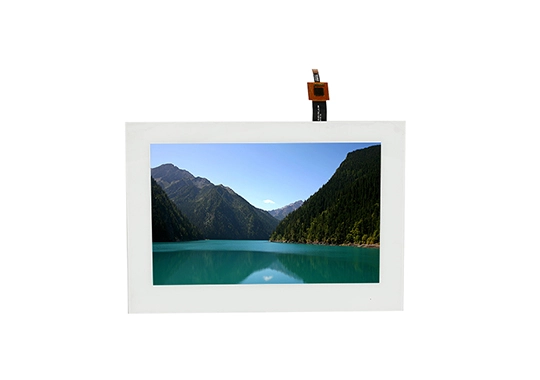
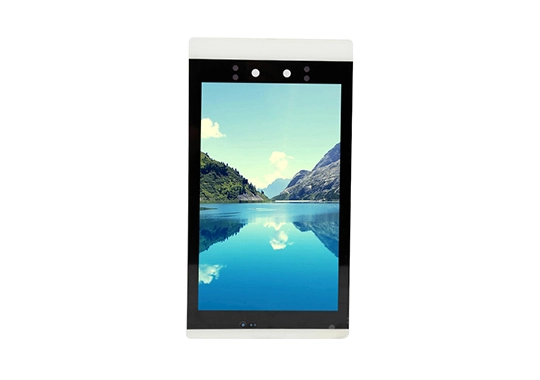
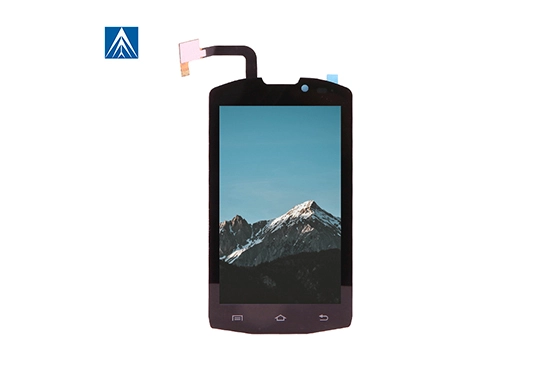
Super Twisted Nematic (STN) LCD technology builds directly upon the foundational principles of TN displays but addresses many of their limitations. While standard TN panels twist liquid crystal molecules by approximately 90°, STN panels dramatically increase this twist angle to 180°–270°. This super-twist configuration results in superior electro-optical performance, including higher contrast and the ability to drive more complex multiplexed displays.STN technology was developed primarily to overcome the multiplexing constraints of basic TN displays. Early TN panels were limited in the number of addressable segments or rows they could support without significant degradation in image quality. By adopting a higher twist angle, engineers enabled passive matrix addressing for more detailed dot-matrix and graphic displays while maintaining low power requirements.Most STN panels are monochrome, typically appearing in classic yellow-green, blue, or black-and-white modes (often enhanced with film compensation in FSTN variants). They excel in environments where clear, high-contrast text and simple graphics are needed rather than vibrant colors.
| Technology | Twist Angle |
|---|---|
| TN LCD | 90° |
| STN LCD | 180°–270° |
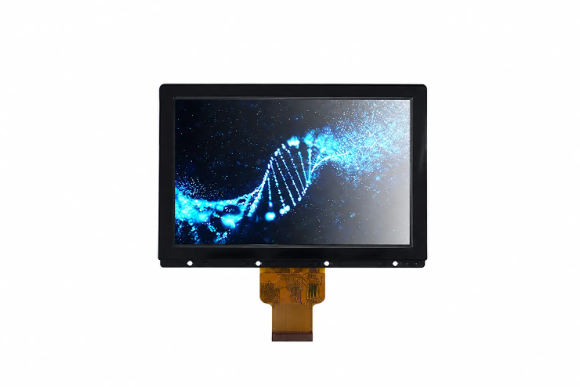
At the core of an STN panel are two polarizers, glass substrates with transparent ITO electrodes, and a layer of nematic liquid crystals. When no voltage is applied, the liquid crystals naturally twist the polarization of light as it passes through the cell. The super-twisted alignment allows for sharper control over light transmission, resulting in better contrast between on and off states compared to standard TN displays.
The larger twist angle (typically 240° in many commercial STN implementations) enhances the optical characteristics by creating a steeper electro-optic response curve. This means the display can switch more effectively between light and dark states, supporting higher multiplexing ratios for dot-matrix or segmented graphics without ghosting or poor contrast. The result is clearer text, more detailed icons, and better overall readability across a wider range of viewing angles.
| Component | Function |
|---|---|
| Polarizer | Controls polarized light direction |
| STN Liquid Crystal Layer | Rotates light path with super twist |
| ITO Electrodes | Drives individual segments or pixels |
| Glass Substrate | Provides structural support and alignment layers |
| Backlight (Optional) | Provides illumination for transmissive/negative modes |
STN technology continues to be favored in industrial and instrumentation markets because it delivers an optimal balance of performance and practicality. Here's why many engineers still specify STN displays for their projects.
One of the standout benefits of STN panels is their exceptionally low energy requirements. Because they are passive matrix displays, they consume minimal power when showing static information—making them ideal for battery-powered utility meters, portable medical instruments, and long-term monitoring devices that must operate reliably for years on limited power sources.
Compared to basic TN displays, STN panels offer noticeably higher contrast and better readability. This improvement is especially valuable in industrial settings where operators need to quickly interpret data under varying lighting conditions. Many STN implementations, particularly those with film compensation (FSTN), achieve crisp black-on-white or white-on-blue appearances that enhance legibility.
STN LCDs are renowned for their robust construction and wide operating temperature ranges, often supporting -20°C to +70°C or even -40°C to +85°C in industrial-grade versions. Their simple structure translates to fewer failure points, long operational lifespans, and proven performance in harsh environments such as outdoor metering or factory automation equipment.
STN panels provide a significantly lower total cost of ownership than full-color TFT solutions. They require simpler driver electronics, less complex software, and lower overall system power budgets. For applications that don’t need rich graphical interfaces or color, STN remains one of the most economical ways to add a clear, professional display.
| Feature | STN LCD |
|---|---|
| Power Consumption | Excellent |
| Cost Efficiency | Excellent |
| Reliability | High |
| Contrast Ratio | Good to Excellent |
| Lifespan | Long |
Selecting the appropriate display technology requires understanding the strengths and trade-offs of each option. The following comparison highlights where STN fits in the broader LCD landscape.
| Parameter | STN LCD | TN LCD | TFT LCD |
|---|---|---|---|
| Contrast Ratio | Good | Basic | Excellent |
| Viewing Angle | Better | Limited | Wide |
| Color Display | Limited (Monochrome) | Limited | Full Color |
| Power Consumption | Excellent | Excellent | Higher |
| Cost | Low | Lowest | Higher |
| Interface Complexity | Simple | Simple | More Complex |
STN displays are the optimal choice for industrial instruments, utility meters, portable equipment, low-power embedded systems, and any application where clear monochrome information display, long battery life, and proven reliability matter more than color or high-resolution graphics.
Opt for TFT LCD panels when your project requires graphical user interfaces, color visuals, touchscreen integration, or more advanced smart control features found in modern automotive dashboards, consumer appliances, and sophisticated medical equipment.
Smart electricity, water, and gas meters rely heavily on STN technology for its low power profile and excellent sunlight readability in outdoor installations. These displays provide clear consumption data and status indicators that remain visible for decades with minimal maintenance.
Measurement equipment, testing instruments, and industrial controllers use STN panels for their durability and ability to present critical data clearly in factory floors or field service environments.
From blood pressure monitors and glucose meters to portable diagnostic tools and home healthcare equipment, STN displays deliver reliable, easy-to-read information with minimal battery drain.
Microwave ovens, air conditioners, washing machines, and smart thermostats incorporate STN modules for straightforward control interfaces that balance cost and functionality.
Handheld devices, remote controls, calculators, and various battery-powered gadgets continue to benefit from the simplicity and efficiency of STN technology.
Positive mode STN displays show dark characters on a light background (commonly black on yellow-green or gray). They excel in bright ambient light conditions and often require no or minimal backlight, resulting in the lowest possible power consumption. This mode is particularly popular for outdoor meters and industrial devices.
Negative mode features light characters on a dark background (white on blue or black). When paired with a backlight, they deliver a premium, high-contrast appearance that performs well in low-light or indoor environments. Many users find negative mode more aesthetically modern and easier to read with backlighting.
| Mode | Appearance | Typical Applications |
|---|---|---|
| Positive | Dark on Light | Meters, Industrial Devices |
| Negative | Light on Dark | Consumer Electronics, Backlit Devices |
Choose segment LCD for simple numeric or icon-based interfaces, dot matrix for alphanumeric text, or graphic LCD for more detailed custom symbols and layouts. Each type offers different levels of information density and design flexibility.
Consider your primary operating environment: positive mode for sunlight readability and minimal power use, or negative mode for enhanced contrast with backlighting in controlled lighting.
Options range from no backlight (reflective/transflective) to white, blue, or RGB LED backlights depending on visibility needs and aesthetic preferences.
Industrial applications often demand wide temperature ranges such as -20°C to +70°C for standard use or -40°C to +85°C for extreme environments. Always verify specifications with your supplier.
Common interfaces include SPI, I²C, and parallel options. Selecting the right interface ensures easy integration with your microcontroller and minimizes development time.
While STN remains dominant in many traditional segments, the industrial display market is evolving. There is growing demand for low-power solutions in smart meters and IoT devices. Many applications are gradually transitioning from pure STN to hybrid or TFT-based interfaces that support richer user experiences while retaining some of STN's efficiency advantages. Touch integration and improved optical performance continue to expand the capabilities of industrial displays overall.
Founded in Shenzhen in 1998, Tazanda (Tianzhengda) has specialized in LCD module manufacturing for over 25 years. As a National High-Tech Enterprise, we combine extensive experience with advanced production capabilities to serve global customers in industrial control, medical equipment, smart home, and automotive sectors.Our quality management system is certified to ISO9001, IATF16949, ISO14001, and IECQ QC080000 standards, ensuring every display meets the highest reliability requirements.
TFT LCD Display – High-performance solutions for demanding applications
CTP Full Lamination Display – Superior touch and optical performance
OLED Display – Premium contrast and efficiency
INCELL Display – Slim integrated touch modules
25+ Years of LCD Manufacturing Experience
Full OEM & ODM Customization Support
Advanced Display and Touch Integration
Industrial and Automotive Grade Quality
Stable Long-Term Supply Chain
Professional Engineering and Technical Support
STN uses a much larger liquid crystal twist angle (180°-270°) compared to TN's 90°, resulting in better contrast, improved viewing angles, and higher multiplexing capability while maintaining low power consumption.
Yes. Positive mode STN panels with transflective polarizers offer excellent sunlight readability and are widely used in utility meters and outdoor industrial equipment.
With proper design and industrial-grade components, STN displays can operate reliably for 10+ years or 50,000+ hours, making them ideal for long-lifecycle products.
Absolutely. Our engineering team specializes in full customization including size, mode (positive/negative), backlight, interface, temperature range, and mechanical design.© 2026 Tazanda Electronics – Your Trusted Partner for Industrial Display Solutions
 English
 日本語
日本語 한국어
한국어 français
 Deutsch
 Español
 italiano
 русский
 português
 العربية
 Malay
Malay