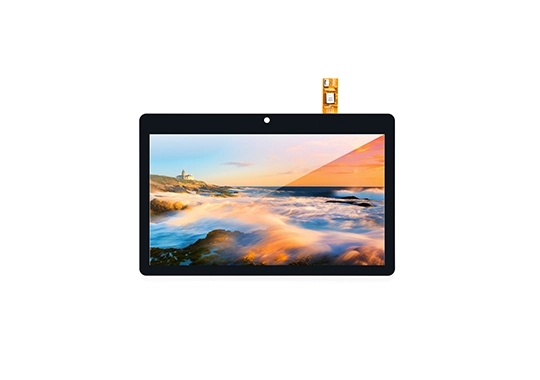
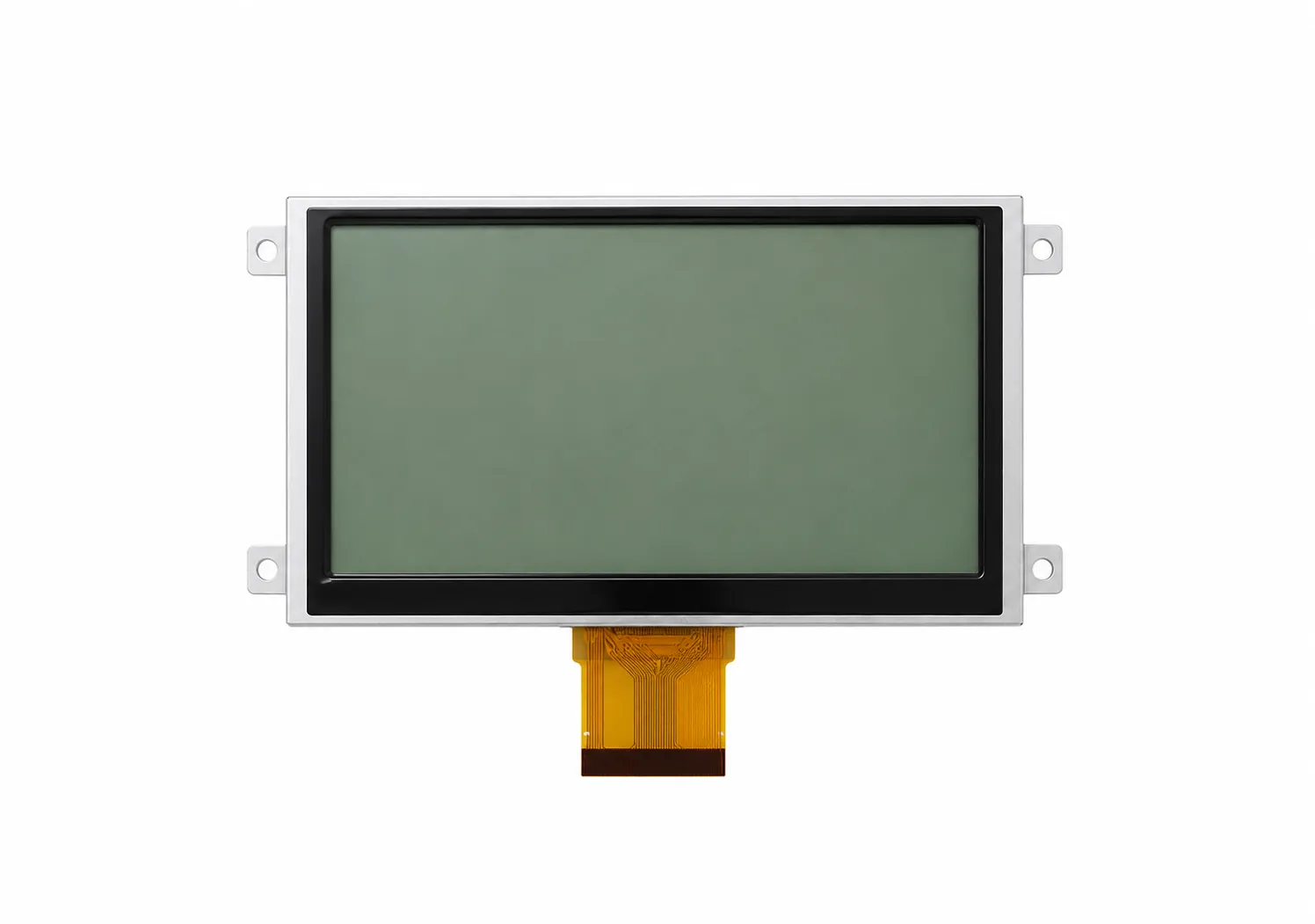
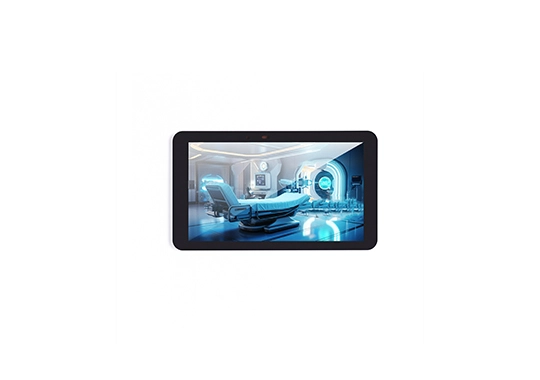
When selecting an LCD display module, many procurement professionals and engineers frequently encounter three common terms: TFT, IPS, and TN. Many people assume they are three competing independent display technologies, but the reality is more nuanced and hierarchical. TFT is actually the underlying active-matrix LCD technology, while TN (Twisted Nematic) and IPS (In-Plane Switching) are different liquid crystal panel structures built on top of the TFT architecture.
TFT achieves independent and precise control of liquid crystal molecules by integrating a thin film transistor at each pixel, significantly improving response speed, contrast, resolution, and overall image quality of the display. This is why almost all mainstream LCD displays today use TFT technology. TN panels, with their simple structure, fast response speed, and low cost, became the most successful commercially available LCD technology in the early days and are still widely used in a large number of industrial and cost-sensitive projects. IPS panels, through the working method of liquid crystal molecules rotating in the same plane, deliver extremely wide viewing angles, accurate color reproduction, and stable image performance, and have become the mainstream choice in high-end consumer electronics, medical, and automotive display fields.
This guide provides an in-depth and comprehensive comparison of TFT vs IPS vs TN from technical principles, performance differences, advantages and limitations, and real-world application scenarios. Whether you are a designer or procurement manager for industrial equipment, medical instruments, smart home products, automotive displays, or embedded systems, you will gain clear selection guidance to help you make the most suitable LCD display solution decision based on project budget, environmental requirements, and user experience goals.
TFT stands for Thin Film Transistor. It is an active-matrix LCD driving technology. Unlike early passive-matrix LCDs, TFT integrates an independent thin film transistor switch behind each pixel, enabling individual charging and discharging control of each pixel for faster and more precise image refresh.
The working principle of TFT technology uses the thin film transistor as a switching element. When the row scanning signal selects a certain row, the corresponding column signal charges the liquid crystal capacitor of that pixel through the TFT transistor, causing the liquid crystal molecules to deflect at the desired angle, thereby controlling the light transmittance to produce images with different gray levels. Because each pixel can be controlled independently, TFT LCD overcomes the problems of slow response, low contrast, and easy ghosting found in traditional passive-matrix displays, delivering higher resolution and better display performance.
It is particularly important to emphasize that TFT is not a specific panel type, but the underlying driving architecture of LCD. The TN panels and IPS panels currently on the market are both based on TFT technology with different liquid crystal alignment methods and molecular control techniques. It can be said that almost all modern TN, IPS, and even VA displays belong to the TFT LCD category. This is why we often refer to “TFT LCD” during selection, but what really needs to be distinguished is whether the underlying panel structure is TN or IPS.
TN panel is short for Twisted Nematic, the earliest LCD panel type to achieve commercial mass production. Its liquid crystal molecules are arranged in a 90-degree helical twist when no electric field is applied. When voltage is applied, the liquid crystal molecules gradually stand up, changing the polarization direction of light to achieve bright and dark display.
The structure of TN panels is relatively simple, with mature production processes and high yield rates, giving them strong cost advantages. This has enabled them to be widely used in various price-sensitive devices over the past decades. Although high-end display fields have now been replaced by technologies such as IPS, TN panels still maintain an important position in industrial control, instrumentation, and other fields due to their unique performance characteristics.
The biggest advantages of TN displays lie in their extremely fast response speed and low manufacturing cost. In practical applications, TN panels usually achieve the best pixel response time, making them especially suitable for dynamic image display scenarios that require high-speed refreshing. Due to their simple structure, power consumption is also relatively low, making them very suitable for battery-powered portable devices. In addition, after years of technological iteration, TN panels have achieved very high reliability and stability, maintaining long-term stable operation even in harsh industrial environments.
However, TN panels also have obvious shortcomings. The most prominent issue is their narrow viewing angle. When viewed from the side, images easily suffer from severe color shift, brightness drop, and contrast distortion. At the same time, TN panels have relatively average color reproduction capabilities and insufficiently fine gray scale performance, making them appear less vivid when displaying complex images or applications requiring precise colors. These characteristics have caused TN panels to be gradually replaced by IPS in consumer-grade products that require multi-angle viewing or high image quality.
IPS (In-Plane Switching) technology is a display technology in which liquid crystal molecules rotate within the same plane parallel to the glass substrate. When voltage is applied, the liquid crystal molecules do not stand up like in TN panels but rotate horizontally, greatly improving the consistency of light transmission.
Compared with TN panels, IPS technology has made fundamental innovations in liquid crystal alignment and electric field control methods. This planar rotation method allows IPS panels to maintain color and brightness consistency when viewed from different angles, significantly enhancing the overall visual experience. Currently, IPS technology has been widely used in various high-end display devices that require high image quality and wide viewing angles.
The most outstanding advantage of IPS displays is the ultra-wide viewing angle of approximately 178 degrees. Whether viewed from the front or at large side angles, the image does not show obvious color shift or brightness attenuation. At the same time, IPS panels have excellent color reproduction capabilities and higher contrast performance, enabling more realistic and natural image colors. In addition, IPS also has obvious advantages in brightness stability, providing consistent visual perception under different ambient lighting conditions and delivering a higher quality user experience.
IPS technology has a more complex manufacturing process, resulting in relatively higher costs. At the same time, its power consumption is usually slightly higher than TN panels, which requires special consideration in scenarios with extreme low power consumption requirements. Early IPS panels lagged behind TN in response time, but with the introduction of new-generation technologies such as Fast IPS, this gap has been greatly narrowed. Many current IPS panels already meet the needs of most high-speed applications.
To make the right display technology choice, it is essential to deeply understand the core differences between TFT, IPS, and TN. TFT is the foundational architecture, while IPS and TN are two different implementation methods. They differ significantly in viewing angle, color performance, response speed, power consumption, and cost.
| Feature | TFT (General Architecture) | TN Panel | IPS Panel |
| Technology Type | Active Matrix Drive | Twisted Nematic | In-Plane Switching |
| Viewing Angle | Depends on panel type | Narrow (prone to color shift) | Extremely Wide (approx. 178°) |
| Color Accuracy | Depends on panel type | Basic | Excellent |
| Contrast | Depends on panel type | Moderate | High |
| Response Time | Depends on panel type | Fastest | Fast (Modern Fast IPS excellent) |
| Power Consumption | Depends on panel type | Low | Moderate |
| Manufacturing Cost | Depends on panel type | Lowest | Higher |
| Typical Applications | Widely used | Industrial control, instruments | Medical, automotive, smart devices |
From the comparison above, it is clear that TN is suitable for extreme cost-performance and high-speed response scenarios, while IPS has an overwhelming advantage in visual experience and multi-angle viewing.
Whether to choose IPS or TN ultimately depends on your specific project requirements, target users, and budget constraints.
If your project is extremely cost-sensitive, mainly used for fixed-angle viewing, requires extreme response speed, or is a simple human-machine interface for industrial sites, then TN panels offer the highest cost performance. They are particularly suitable for POS machines, industrial controllers, HMI panels, and basic measuring instruments.
If you want to provide end users with high-quality visual experiences, the product needs to be viewed by multiple people from different angles, or is used outdoors or in medical applications that require high color accuracy, IPS panels will be the better choice. They are widely used in medical diagnostic equipment, smart home control panels, EV charging stations, automotive instrument and central control displays, and portable high-end instruments.
In the industrial field, display selection is often more practical, requiring a balance between cost, reliability, and actual usage environment.
Most industrial control cabinets and PLC human-machine interfaces still prefer TN panels. Because operators usually view the screen from a fixed position, cost control is an important consideration, and TN’s fast response helps display real-time data and alarm information.
Medical display devices strongly recommend IPS panels. Doctors and nurses often need to view the screen from different angles, and have extremely high requirements for color accuracy and detail performance. IPS can provide more reliable diagnostic support display effects.
Smart home control panels and switch products are increasingly inclined to adopt IPS technology to enhance the visual comfort and premium feel of daily user interaction.
Vehicle-mounted instruments and central control entertainment systems recommend IPS panels. Because the viewing angles of drivers and passengers inside the car vary greatly, it is necessary to ensure important information can be clearly seen from any position.
In scenarios such as outdoor inspection instruments and industrial tablets, IPS panels are more advantageous due to their excellent outdoor visibility and multi-angle viewing capabilities.
| Industry Field | Recommended Panel | Main Reasons |
| Industrial Control | TN | Cost sensitive, fixed viewing angle |
| Medical Equipment | IPS | Color accuracy, multi-angle viewing |
| Automotive Displays | IPS | Driver and passenger multi-angle needs |
| Smart Home | IPS | User experience priority |
| Consumer Electronics | IPS | High-end visual requirements |
| Budget Devices | TN | Extreme cost performance |
As a professional LCD module manufacturer with more than 26 years of experience, Tianzhengda (Tianzhengda) is committed to providing global OEM customers with one-stop display solutions from solution selection to mass production delivery. We can provide TN LCD modules, IPS LCD modules, standard TFT displays, capacitive touch integrated modules, INCELL full lamination displays, and ultra-narrow bezel display solutions according to the specific needs of different industries.
Our engineering team has rich cross-industry project experience and can participate in requirement analysis at the early stage of the project to help customers balance performance, cost, and reliability. We have passed ISO9001 and IATF16949 system certifications, hold more than 30 patented technologies, and provide customers with 7×24-hour technical support and 8D problem analysis reports to ensure the smooth progress of the project.
IPS is significantly better than TN in viewing angle, color performance, and overall visual experience, but TN still has advantages in cost, response speed, and low power consumption. You cannot simply say which is better; it depends on the specific application scenario.
The essence of this question is a misunderstanding. TFT is the underlying technology architecture, and IPS is a panel type based on TFT. They are not in a competitive relationship. Currently, almost all IPS displays are TFT LCDs.
Industrial environments often have higher requirements for cost and reliability, and operators have relatively fixed viewing angles. The cost performance and maturity of TN panels make them still the preferred solution for many industrial projects.
IPS technology currently provides the best viewing angle, close to 178 degrees, with almost no color shift.
IPS panels are the first choice for medical equipment. Their excellent color accuracy and wide viewing angles can better meet clinical diagnosis and multi-person viewing needs.
Yes. When paired with high-brightness backlights and anti-glare treatments, IPS displays perform excellently in outdoor environments. Many industrial-grade and automotive-grade IPS modules support wide temperature operation and clear display under strong light.
TFT is the cornerstone of modern LCD display technology. TN panels remain the most economical choice for pursuing extreme cost performance and high-speed response, while IPS has become the mainstream technology for modern high-quality user interfaces with its excellent color and viewing angle performance. The final choice depends on your application environment, budget constraints, and requirements for user experience.
If you are evaluating LCD display modules for industrial, medical, automotive, or smart device projects, please feel free to contact the Tianzhengda professional team. We will provide the most suitable technical solutions and reliable mass production support based on your specific needs to help your products reach the market faster.
 English
 日本語
日本語 한국어
한국어 français
 Deutsch
 Español
 italiano
 русский
 português
 العربية
 Malay
Malay