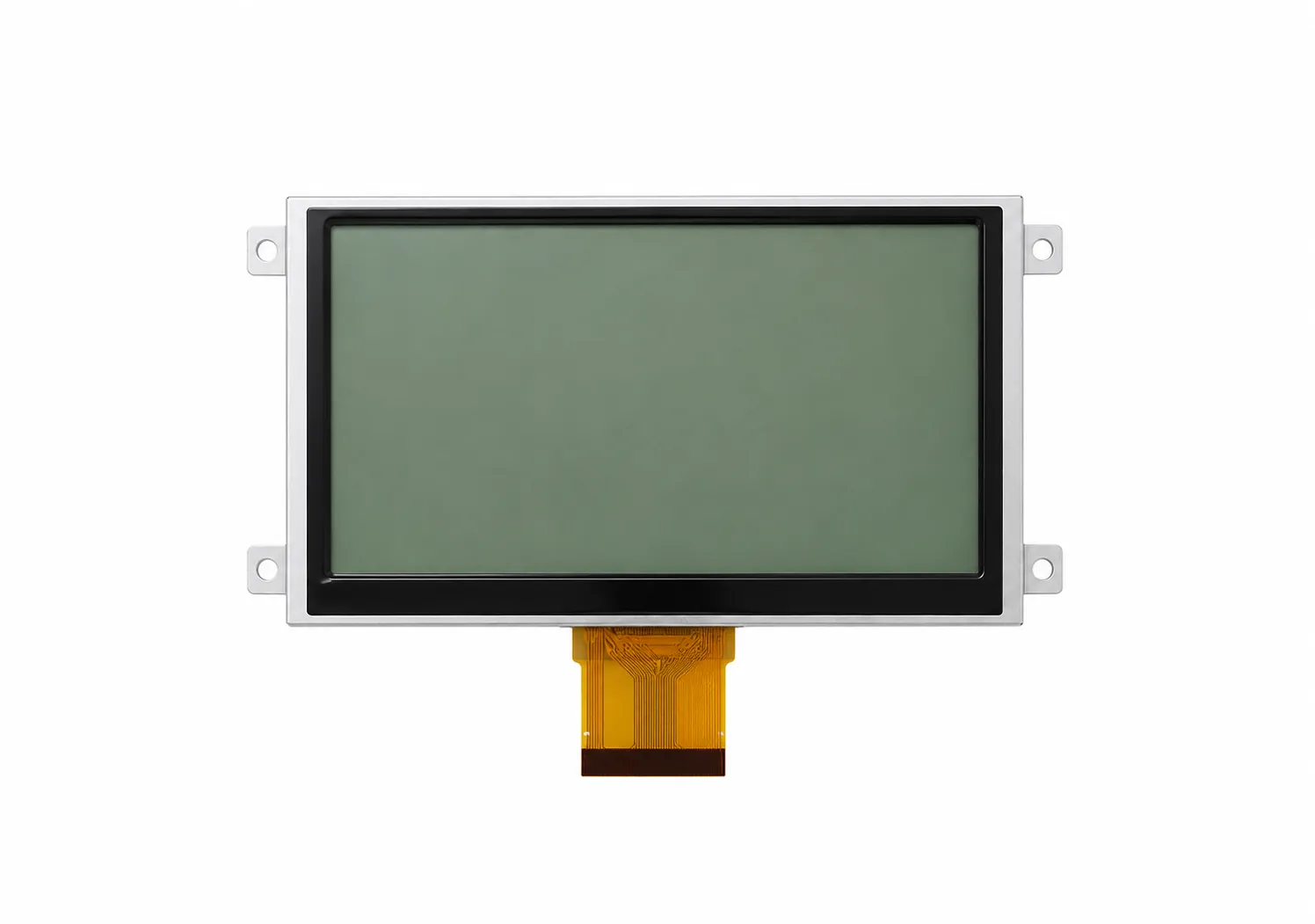
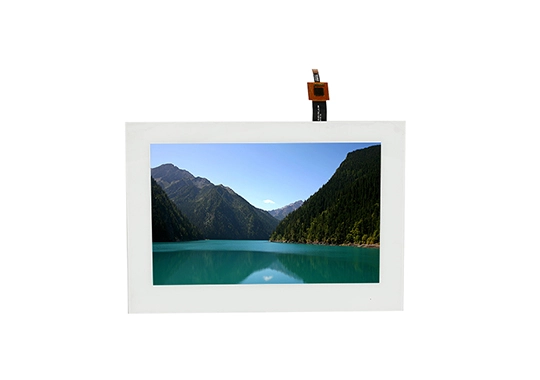
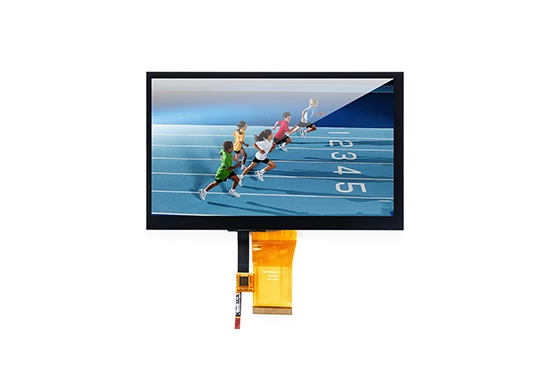
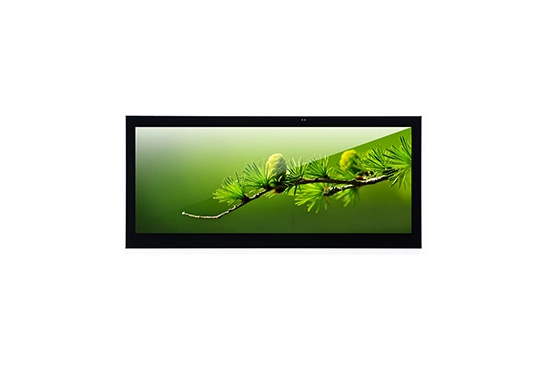
To fully appreciate the value of an IPS display, we must first look at its definition and its place within the broader display ecosystem. IPS, which stands for In-Plane Switching, is a highly advanced sub-category of TFT (Thin-Film Transistor) LCD technology.Originally developed in the mid-1990s by Hitachi, IPS technology was engineered with a specific mission: to solve the glaring flaws of traditional Twisted Nematic (TN) panels. Early TN displays suffered from severe color inversion and drastic contrast loss when viewed from an angle. If you weren't looking directly at the center of the screen, the image became unreadable.IPS solved this by fundamentally redesigning how the liquid crystal molecules behave when an electrical current is applied. Instead of twisting perpendicularly (vertically) to the glass substrates like in TN panels, the liquid crystals in an IPS panel remain parallel to the glass surfaces—they switch within the same plane. This horizontal rotation means that light passes through the matrix uniformly, regardless of the angle from which the screen is viewed.
Visual Concept: A side-by-side comparison showing TN molecules twisting vertically in a helix shape, contrasted with IPS molecules rotating horizontally on a flat plane.
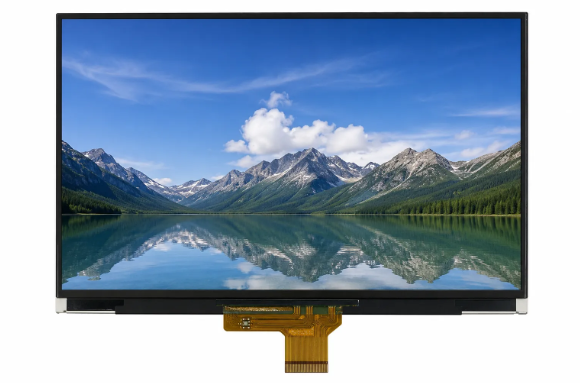
Understanding the inner workings of an IPS panel helps hardware designers make informed decisions regarding backlight power, interface requirements, and overall device architecture. The magic happens at a microscopic level.
In a standard LCD, liquid crystals act as light valves, blocking or allowing the backlight to pass through color filters. In an IPS panel, both the positive and negative electrodes are positioned on the same bottom substrate (unlike TN panels, which place them on opposing substrates).When a voltage is applied, the electrical field travels horizontally. This forces the liquid crystal molecules to rotate parallel to the substrate—maintaining their "in-plane" orientation. Because the molecules never stand vertically, light is not scattered haphazardly. Instead, the transmitted light maintains a strict, uniform path, ensuring that the colors and brightness remain entirely intact, whether you are looking straight on or from the side.
The "TFT" in IPS TFT LCD stands for Thin-Film Transistor, which provides the active matrix control necessary for high-resolution imagery. Every single sub-pixel on the screen is paired with its own microscopic transistor.
This pixel-level control ensures that the exact required voltage is delivered to individual liquid crystal cells instantly. The result is a drastically improved refresh rate, elimination of image ghosting, and unparalleled image stability. Furthermore, because the IPS molecular structure is inherently more robust, pressing a finger against the screen does not cause the "rippling" or "tailing" effect seen in older screens, earning IPS the industry nickname of a "Hard Screen."Component Function Table:
| Component | Engineering Function |
| Backlight Unit (BLU) | Provides the essential, uniform illumination from the rear of the panel. |
| Polarizer | Controls the direction of the light waves entering and exiting the display. |
| IPS Liquid Crystal Layer | Modulates the transmitted light by rotating horizontally based on voltage. |
| TFT Array | The active matrix that actively controls the electrical state of individual pixels. |
| Color Filter | Passes the modulated light through Red, Green, and Blue sub-pixels to create full-color images. |
Why do engineers consistently allocate more of their Bill of Materials (BOM) budget to IPS panels? The answer lies in four distinct performance advantages that directly impact the end-user's experience.
The hallmark of IPS technology is its near-perfect viewing angle, officially rated up to 178 degrees both horizontally and vertically. In practical terms, this means the display can be viewed from almost entirely sideways without experiencing any annoying color shift, grayscale inversion, or drop in contrast.
This is an absolute necessity for Human-Machine Interface (HMI) systems on busy factory floors, where an operator might glance at a machine from across the room. It is equally critical for medical monitors, where multiple surgeons and nurses need to view patient vitals simultaneously from different positions around an operating table.
If color fidelity matters to your product, IPS is the definitive choice. Because the horizontal alignment of the liquid crystals manages light transmission with extraordinary precision, IPS panels can achieve deeper blacks, brighter whites, and a remarkably wide color gamut.
The color consistency is unparalleled. A red warning sign on an IPS industrial control panel will look exactly the exact same shade of red whether viewed from the top, bottom, or side. For color-sensitive applications—such as dermatological diagnostic equipment or high-end retail point-of-sale displays—this accuracy ensures the visual data is reliable and engaging.
IPS panels do not suffer from the "washout" effect typical in lesser displays. Even in environments with complex ambient lighting, the image distortion is mathematically minimized. The stable brightness output guarantees that complex schematics, small text fonts, and intricate user interfaces remain perfectly readable without the user needing to adjust their posture or the screen's tilt.
Today's consumers and professional users expect smartphone-level quality on every device they interact with. An IPS panel instantly elevates the perceived value of your hardware. Furthermore, because IPS panels have a physically firmer liquid crystal structure, they are the ideal foundation for modern touch screen integration. When users tap, swipe, or pinch a capacitive touch interface on an IPS screen, the display remains pristine, free of the liquid-like ripples that plague older technologies.Feature Summary Table:
| Feature | IPS TFT LCD Performance |
| Viewing Angle | Excellent (Up to 178°) |
| Color Accuracy | Excellent (True-to-life rendering) |
| Image Stability | Excellent (No pressure rippling) |
| Industrial Reliability | High (Robust for 24/7 operation) |
During the procurement phase, hardware teams often face the classic debate: Should we specify an IPS panel or a TN panel? While both are TFT LCD technologies, their distinct mechanical differences make them suited for very different applications.Technical Comparison:
| Parameter | IPS TFT LCD | TN TFT LCD |
| Viewing Angle | 178° Ultra-Wide | Limited (Prone to color inversion) |
| Color Accuracy | Excellent | Standard |
| Contrast Stability | Excellent | Moderate |
| Response Time | Good (Steadily improving) | Excellent (Extremely fast) |
| Cost | Higher | Lower |
| Industrial Applications | Excellent (For complex HMI) | Good (For simple readouts) |
You should definitively choose an IPS panel when the visual experience is a core selling point of your product, or when inaccurate data interpretation could lead to user error.
Industrial HMI: Where operators view complex data arrays from various angles.
Medical Equipment: Where color accuracy is required for diagnostics and patient monitoring.
Automotive Displays: Where drivers and passengers share viewing of the central infotainment console.
Smart Home Control Panels: Where premium aesthetics and wide-angle readability are expected by the consumer.
TN panels still hold a significant market share and shouldn't be entirely discounted. They are often the better choice for strictly cost-sensitive projects, basic industrial interfaces (like a simple digital thermostat), or entry-level devices where the user will only ever view the screen from a fixed, direct, head-on position.
Because of their versatility and premium performance, IPS displays are integrated into virtually every sector of the modern tech economy.
In the rugged world of factory automation, clarity is safety.
PLC Interfaces: Engineers rely on crisp text to read logic controller statuses.
Industrial HMI Displays: Complex robotic control panels require wide viewing angles so operators can monitor processes while moving around the machinery.
Automation Equipment: Packaging and sorting machines use robust IPS screens that won't distort under the heavy vibrations of the factory floor.
The medical sector demands absolute precision.
Diagnostic Equipment: Ultrasound and MRI machines rely on the deep contrast and color fidelity of IPS to spot microscopic tissue anomalies.
Portable Medical Devices: High-brightness IPS panels allow EMTs to read defibrillator screens clearly, even in bright outdoor environments.
Patient Monitoring Systems: Bedside monitors can be clearly seen by a nurse standing across the room, thanks to the 178° viewing angle.
Modern vehicles are essentially computers on wheels, and the cabin is dominated by screens.
Instrument Clusters: Drivers need glare-free, highly visible speed and safety readouts regardless of their seating position.
Central Control Displays: Navigation and media hubs are viewed by both the driver and the passenger, making IPS the only logical choice.
Rear-Seat Entertainment Systems: Ensuring premium viewing experiences for passengers.
As homes become intelligent, the interfaces must match modern interior design standards.
Home Control Panels: Central hubs for lighting and climate control demand wide-angle visibility and premium touch sensitivity.
Smart Thermostats: High-resolution IPS screens elevate a basic utility into a high-end architectural feature.
Security Systems: Homeowners need clear, color-accurate video feeds from their doorbell cameras, day or night.
Reliability and clarity drive faster transactions.
Payment Terminals: Handheld card readers must be easily readable by both the cashier and the customer.
Self-Service Kiosks: Fast-food ordering kiosks use large IPS panels to make food imagery look appetizing and to allow groups to view the menu together.
Retail Equipment: Inventory management scanners require screens that remain readable under harsh fluorescent warehouse lighting.
Procuring the correct display module is a critical engineering milestone. Here is how B2B buyers and product architects should evaluate their options.
The physical footprint of your device dictates the panel size. IPS panels are highly scalable.
Compact Sizes (2.4", 3.5", 4.3", 5"): Ideal for handheld medical devices, smart thermostats, and portable POS terminals.
Mid-to-Large Sizes (7", 10.1", 12.1"): The industry standard for factory HMI systems, automotive infotainment, and self-service kiosks.
A larger screen doesn't automatically mean a better image; the resolution must scale appropriately to prevent pixelation. Match your resolution to the processing power of your motherboard.
| Screen Size | Common Resolution | Application Suitability |
| 4.3 inch | 480 × 272 | Basic handheld terminals |
| 5.0 inch | 800 × 480 | Smart home interfaces, basic medical |
| 7.0 inch | 1024 × 600 | Automotive central consoles, industrial HMI |
| 10.1 inch | 1280 × 800 | High-end automation, medical diagnostics |
A display that looks brilliant in a laboratory might be completely unreadable outdoors.
Indoor Applications: Standard IPS panels offering 300–500 nits are perfectly sufficient for smart home hubs, indoor POS, and hospital monitors.
Outdoor Applications: If your device is an EV charging station, a marine GPS, or an outdoor kiosk, you must specify a high-brightness IPS solution ranging from 700 to 1000+ nits, often paired with anti-glare (AG) surface treatments.
How will your mainboard talk to the display?
MCU / SPI: Great for lower resolution screens and systems with basic microcontrollers.
RGB: A reliable parallel data interface for mid-sized industrial screens.
LVDS: The gold standard for larger, high-resolution panels, offering fast data transfer with high resistance to electromagnetic interference (EMI).
MIPI: Essential for compact, high-resolution applications (like automotive clusters) requiring massive data bandwidth through very few pins.
Almost all modern IPS applications require interactivity.
Capacitive Touch (PCAP): Provides multi-touch capabilities, durability, and a sleek user interface.
Optical Bonding / Full Lamination: To achieve the ultimate optical performance, engineers specify a CTP Full Lamination Display. This process removes the air gap between the touch sensor and the IPS panel, drastically reducing internal reflections, increasing durability, and keeping dust and moisture out.
The display industry never stands still. Forward-thinking hardware developers are already leveraging the next wave of IPS innovations.
By minimizing the inactive border area, manufacturers are creating edge-to-edge displays. This allows engineers to fit larger screens into smaller device housings, a critical trend in portable medical gear and sleek consumer IoT devices.
As more technology moves outdoors (smart agriculture, drone controllers, outdoor payment), the push for thermally stable, ultra-bright (1500+ nits) IPS panels that do not overheat in direct sunlight is rapidly accelerating.
Traditional touch screens are thick because they involve layering a touch sensor over the display.
The future is INCELL. By embedding the touch sensors directly within the IPS liquid crystal layer, manufacturers are achieving noticeably better optical performance, significantly slimmer physical designs, and improved drop durability.
With the rise of electric and autonomous vehicles, displays must pass rigorous vibration, temperature (-30°C to 85°C), and longevity testing. Automotive-grade IPS panels are being reinforced with heavy-duty optical bonding to meet these uncompromising safety standards.
When your product's reputation relies on the screen it uses, you need a manufacturing partner, not just a supplier.
Founded in the tech hub of Shenzhen in 1998, Tazanda (Tianzhengda) has dedicated over two decades to the mastery of LCD module manufacturing. Recognized proudly as a National High-Tech Enterprise, we specialize in engineering advanced display technologies and fully integrated touch solutions for the world's most demanding sectors: industrial, medical, financial, smart home, and automotive.Our commitment to flawless quality is reflected in our rigorous adherence to international standards. Tazanda operates under strict certifications, including:
ISO9001 (Quality Management)
IATF16949 (Automotive Quality Management)
ISO14001 (Environmental Management)
IECQ QC080000 (Hazardous Substance Process Management)
We provide comprehensive visual architecture for modern hardware:
TFT LCD Display: Rugged, highly reliable display solutions optimized for industrial and embedded applications.
CTP Full Lamination Display: Premium modules offering enhanced optical performance, zero-parallax viewing, and unmatched durability through advanced optical bonding.
OLED Display: High-contrast, ultra-thin technology for next-generation smart devices.
INCELL Display: State-of-the-art integrated touch solutions offering thinner profiles and superior touch responsiveness.
20+ Years LCD Manufacturing Experience: We have the technical depth to solve complex optical engineering challenges.
OEM & ODM Support: From bespoke FPC layouts to custom backlight designs, we build precisely what your project demands.
Industrial and Automotive-Grade Quality: Our screens are built to survive extreme temperatures, continuous use, and harsh environments.
Stable Long-Term Supply Chain: We protect your Bill of Materials from sudden obsolescence.
Engineering Support Throughout Product Development: Our engineers work alongside yours from rapid prototyping to final mass production.
1. What exactly is IPS display technology?
IPS (In-Plane Switching) is an advanced type of TFT LCD technology. It utilizes liquid crystals that align horizontally parallel to the glass substrates. This unique mechanism dramatically improves viewing angles and color accuracy compared to traditional displays.
2. Is an IPS panel better than a TN or VA panel?
For most professional applications, yes. IPS strongly outperforms TN in color accuracy and viewing angles, preventing the screen from looking "washed out" from the side. While VA (Vertical Alignment) panels offer slightly higher contrast ratios, IPS remains superior in color consistency and wide-angle readability, making it the top choice for industrial and medical use.
3. What does "Full Lamination" mean on an IPS display?
Full lamination (also known as optical bonding) is a manufacturing process where an optical-grade adhesive is used to bond the touch screen directly to the IPS LCD panel, completely eliminating the air gap. This reduces screen glare, prevents dust and condensation from entering, and makes the display physically much stronger.
4. Can an IPS TFT LCD be used outdoors?
Yes, but standard IPS panels (300-500 nits) may struggle in direct sunlight. For outdoor equipment like EV chargers or kiosks, you should specify a High-Brightness IPS module (700 to 1000+ nits) from Tazanda, ideally paired with an Anti-Glare (AG) surface treatment.
5. What is the difference between IPS and TFT?
This is a common point of confusion. TFT (Thin-Film Transistor) is the broad category of active-matrix LCDs. IPS is simply a highly specialized, premium subtype of TFT LCD. Therefore, all IPS panels are TFT panels, but not all TFT panels feature IPS technology.
 English
 日本語
日本語 한국어
한국어 français
 Deutsch
 Español
 italiano
 русский
 português
 العربية
 Malay
Malay